Lockouts · Peterborough
Broken Key Extraction in Peterborough
In the parking lot your car key snapped in the driver's door. You are holding the plastic head with the buttons on it, the metal blade is inside the lock, and the spare is on a hook at home.
Broken Key Extraction
In plain words
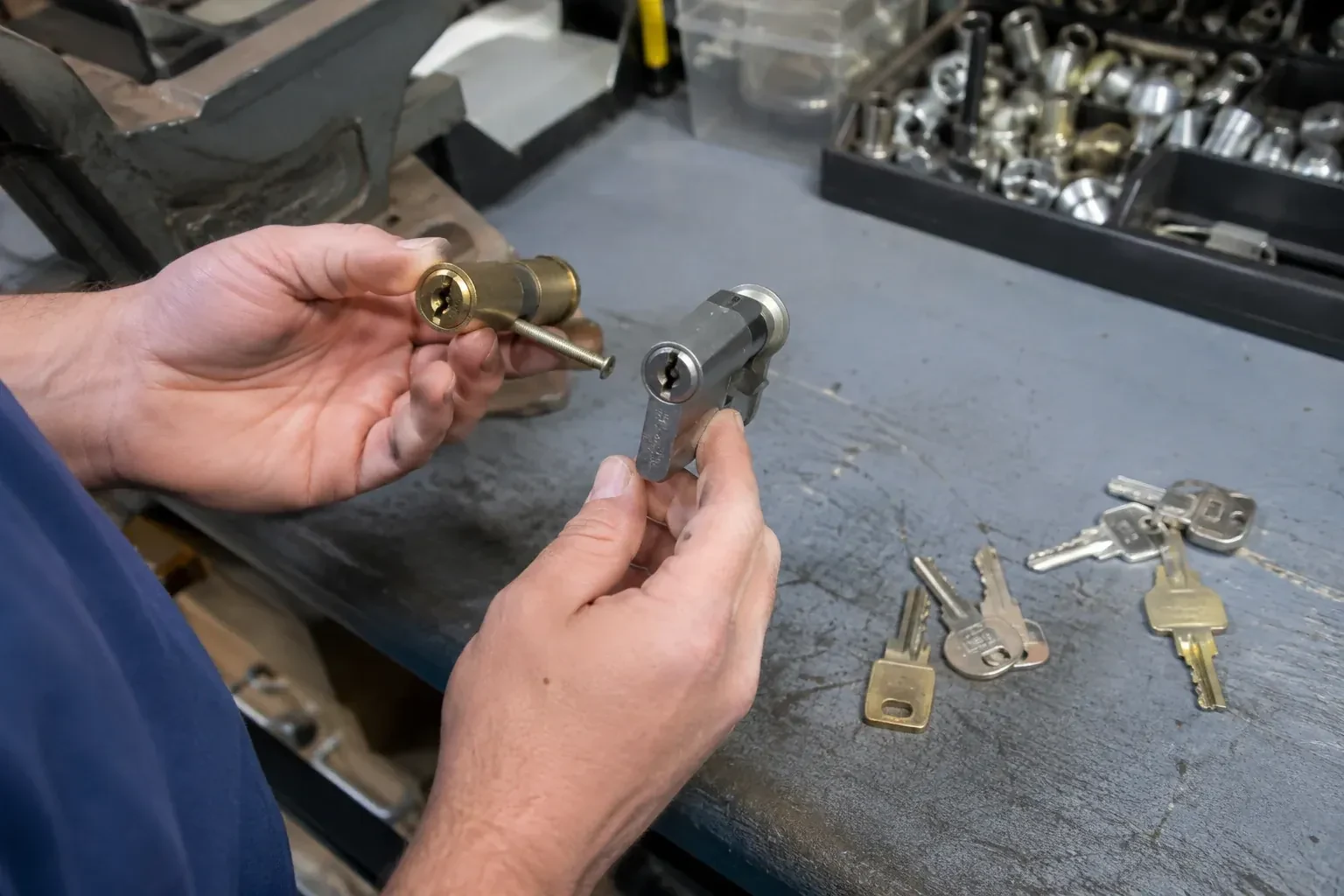
The tools are simple and precise. A hook extractor is a thin strip of spring steel with a barb at the tip; it slides along the groove of the keyway above or below the fragment, snags one of the cuts, and walks it out. A spiral extractor works like a tiny screw, threading into the ridges of the cuts and gripping as it turns. Fine-tipped extractor pliers handle a piece that shows above the face. A tension tool brings a turned plug back to rest. None of these push inward, which is the whole point: the piece comes out the way it went in and the cylinder stays whole.
How the visit goesThe padlock on the shed has been stiff all summer. Today the key twisted, cracked at the tip, and left the end buried deep in the keyway. The rest came out in your hand, and the padlock is still closed.
Peterborough
How the visit goes
The half in your hand
The bow and stub you are holding are worth a look before anything else. The cuts on it identify the key blank and give most of the bitting, so a replacement can be read straight from it and the fragment once they are side by side. Its condition tells a story too: thinning at the cuts, a slight bend, a crack line or a shiny worn tip all say the key was near the end of its life. The locksmith also asks about spares. A crisp spare, or the key code tag that came with the lock, is a better pattern for the new key than any worn copy.
When the piece is standing proud
A fragment that shows above the cylinder face looks like the easy case, and it is, provided nobody pushes on it. The locksmith grips it with fine-jawed extractor pliers or needle-point tweezers made for the purpose, steadies the cylinder with the other hand, and pulls straight out along the line of the keyway. If it resists, the plug is checked for rest position rather than the pull being increased, because a piece forced against lifted pins can bend them. A trace of dry lubricant at the keyway entrance eases a tight fit. The piece comes out whole, and the lock is ready to test.
A door that no longer fights the key
If the bolt had been dragging in its strike, that is corrected while the locksmith is there, because a bolt that binds turns every key into a lever. Dropped hinges get longer screws driven into the framing; a strike pocket that pinches the bolt is filed or shifted; a weatherstrip that was pushing the door off square is pared back. The test is simple: the thumb-turn should throw the bolt with one finger and no push on the door. Since wood swells in humid summers and shrinks in dry winter air, a seasonal glance at the screws keeps the key from taking the strain again.
Broken Key Extraction
In the van
- Plug follower and cap tool
- Spiral key extractors
- Key gauge and decoder
- Key blanks and code cutter
- Vehicle key blades and chip shells
What affects the quote
Same fees day, night or weekend
1Removing the cylinder to free it
A deep or bound fragment may need the cylinder taken off the door and the plug pushed out from behind on the bench. That disassembly and reassembly is quoted on its own.
2Rekeying other doors to match
If the cylinder ends up rekeyed or replaced, matching the other exterior locks to the new key is priced per cylinder, and simplest while the locksmith is already there.
3How the new key is made
Cutting from a key code or a crisp spare, decoding the two halves with a gauge, or cutting a restricted blank from system records each take different time and stock.
Broken Key Extraction: questions
Do you need my spare key?
It helps if there is one. A crisp spare is the ideal pattern for the replacement, better than the broken halves and far better than a worn copy. It also lets the locksmith test the cylinder the moment the fragment is out, which shows whether the pins and springs are sound. If the spare is itself bent or worn, mention that too; it is a candidate for retirement rather than a pattern.
What lubricant should I use on the lock afterwards?
Whatever the lock's own maker specifies, since cylinders differ: many call for a dry graphite or PTFE spray blown into the keyway and worked in with the key, once or twice a year, while others prohibit graphite and specify their own product instead. General-purpose oils, grease and sprays feel smooth at first but on most cylinders collect dust and clog the pins, which leads back to the sticking that breaks keys. A little goes a long way; too much of any lubricant can also hold moisture.
The key broke while the door was locked. Can you still get me in?
Yes. The fragment comes out first, because nothing else can happen while it blocks the keyway. With the cylinder clear and the plug at rest, the door is opened by the same non-destructive methods used for any lockout, then a working key is cut and tested. If the door is a rental, the visit is noted for the building manager on request.
Lockout Services
- Business Lockout ServiceAfter last night's power flicker the card reader beside the clinic door shows nothing.
- Break-In Damage Lock RepairPolice have come and gone, the occurrence number is on a sticky note, and you are standing in a…
- Seized & Jammed Lock OpeningThe key slides all the way in, exactly as it has for years, and then refuses to turn in either…
Broken Key Extraction near you
From the front door of a house to the back door of a warehouse, the work in Peterborough comes down to a few families of jobs: getting in, changing who can get in, making it harder for the wrong people to get in, and keeping the hardware turning smoothly year after year. Browse the list to find yours.