High security · Peterborough
Safe Installation & Servicing
The keypad on the office safe blinks a low-battery warning every morning now, and whoever notices it first quietly hopes someone else deals with it before the batteries finally give out mid-week.
Safe Installation & Servicing
In plain words
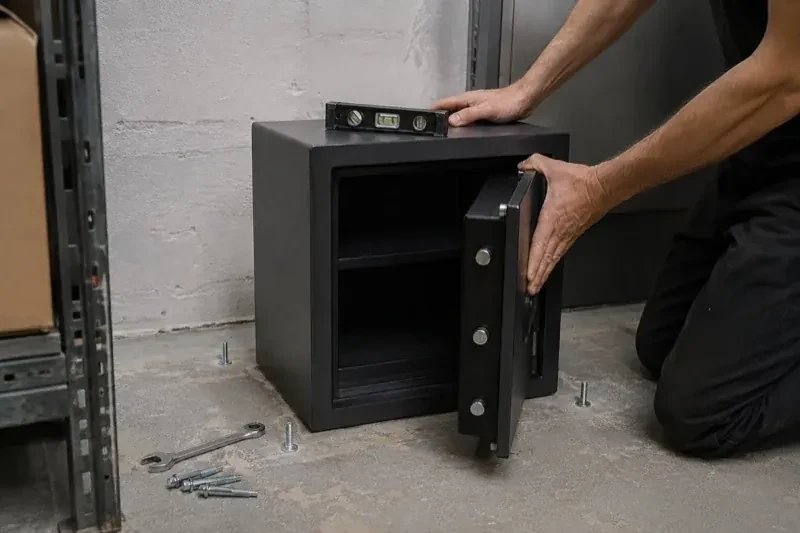
Relocating an existing safe is closer to a small structural project than a simple carry. The unit is unbolted, moved on proper equipment rather than dragged, and protected through doorways and stairwells that were never designed with several hundred pounds of steel in mind. At the new address the floor or wall construction is checked again from scratch, because a slab that held the safe at the old office may be entirely different from the one at the new address, and anchoring hardware is chosen to match rather than reused automatically.
How the visit goesA dinner service ends with a stack of bills and a handful of credit slips, and right now they sit in an unlocked cash box on a shelf until morning, because nobody has gotten around to anything sturdier.
Peterborough
How the visit goes
What the safe actually needs to hold
Before any hardware is chosen, the locksmith asks what will actually sit inside: cash from a till, jewelry, firearms, paper contracts, backup drives, or some mix of all of it. Each of those has a different enemy. Cash and jewelry are mainly at risk from tools and time, so a burglary rating matters most. Paper is mainly at risk from heat, so a fire rating matters most, and digital media needs a much lower internal temperature than paper to survive the same fire. Answering this question first is what keeps the rest of the visit from guessing.
Bringing an existing safe back into full working order
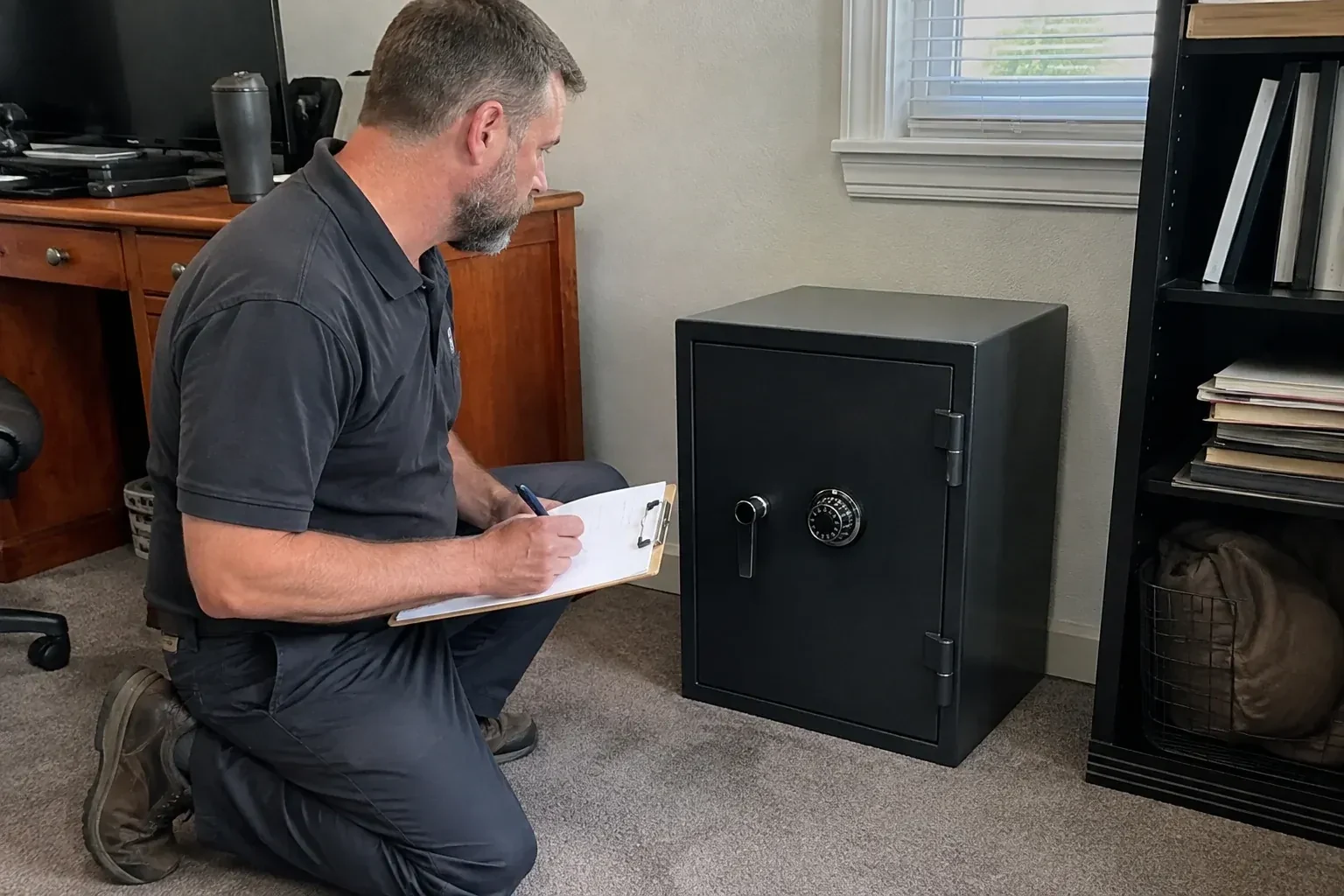
Servicing starts with the bolt-work: the mechanism is opened, cleaned of old grease and grit, and lubricated with a product suited to steel bolt-work rather than a general household oil. The lock is cycled repeatedly and adjusted if it binds or hesitates, and any handle or spindle that has worked loose is tightened. Batteries in an electronic lock are replaced as routine maintenance rather than waiting for a failure, and the door seal and hinges are checked and freed if they have picked up rust.
Bolt-work that keeps moving smoothly
The internal mechanism that throws and retracts the bolts benefits from the same kind of attention a door lock gets, on a longer cycle. A dry or purpose-made bolt-work lubricant, applied every year or two depending on how often the safe is opened, keeps the mechanism from stiffening with old grease or picking up rust in a damp room. Household oil is generally the wrong choice here, since it tends to attract dust and grit rather than shed it the way a purpose-made lubricant does.
Safe Installation & Servicing
In the van
- Wood subfloor lag bolts and washers
- Nine-volt backup battery
- Bolt-work lubricant
- Level and floor shims
- Concrete anchor bolts
What affects the quote
Same fees day, night or weekend
1Access route to the final position
Stairs, narrow doorways, tight corners, and whether an elevator or loading dock is involved all affect how the safe gets to its spot and how much handling that route requires.
2New installation versus servicing an existing unit
Fitting a brand-new safe involves positioning, anchoring, and lock setup from scratch, while servicing an existing one focuses on bolt-work, lock testing, and confirming or adding anchoring, generally a shorter list of tasks.
3Floor or wall construction
Solid concrete, a wood subfloor reaching into joists, and tile each call for a different anchoring approach and different hardware, and the substrate is confirmed before any drilling begins.
Safe Installation & Servicing: questions
What kind of floor can a safe be anchored to?
Solid concrete is the most straightforward surface, taking a masonry anchor bolt directly. A wood subfloor works too, provided the anchoring reaches into the floor joists beneath the surface layer rather than just the plywood or the flooring on top. Tile is the awkward case, since a bolt through it tends to crack the surrounding tiles, and an alternative anchoring point or a different spot in the room is usually the better route there.
What information should I have ready before requesting a quote?
Knowing roughly what the safe will store, whether it is a new purchase or an existing unit, and what floor or wall it will sit against covers most of what shapes the visit. If the safe is already on site, its approximate weight and dimensions help too, along with whether it currently has a working lock and combination. An insurer's stated rating requirement, if there is one, is worth mentioning as well.
Can more than one person have their own code?
Yes, on an electronic keypad that supports multiple users, each person can be given a separate code rather than everyone sharing one, which also makes it simple to remove a single code later without resetting the whole lock. A mechanical dial lock, by contrast, has one combination for everyone who needs it, so a change in who has access there means changing that one combination.
High Security Locks
Safe Installation & Servicing near you
From the front door of a house to the back door of a warehouse, the work in Peterborough comes down to a few families of jobs: getting in, changing who can get in, making it harder for the wrong people to get in, and keeping the hardware turning smoothly year after year. Browse the list to find yours.