Locksmith · Peterborough
Help yourself first
What should you do the day you move in? How do you know if a lock is worth keeping? Why does your car key work some days and not others? These notes answer the questions that come up again and again, in enough detail to be useful and no more.
- Issue 1Master Key System Design: what to note firstThe office key ring has become the org chart. Every manager carries a fistful of cuts, a couple of staff hold copies nobody remembers issuing, and when someone asks which key opens the records room…Read
- Issue 2Vintage Mortise Lock Service: what the visit coversThe trim on the door face is the other half of the lock. The knobs ride on a square spindle that passes through the hub of the case, held by small set screws, and the escutcheons cover the spindle…Read
- Issue 3Broken Key Extraction: comparing quotesYes. The fragment comes out first, because nothing else can happen while it blocks the keyway.Read
Locksmith FAQ
Lockout Services
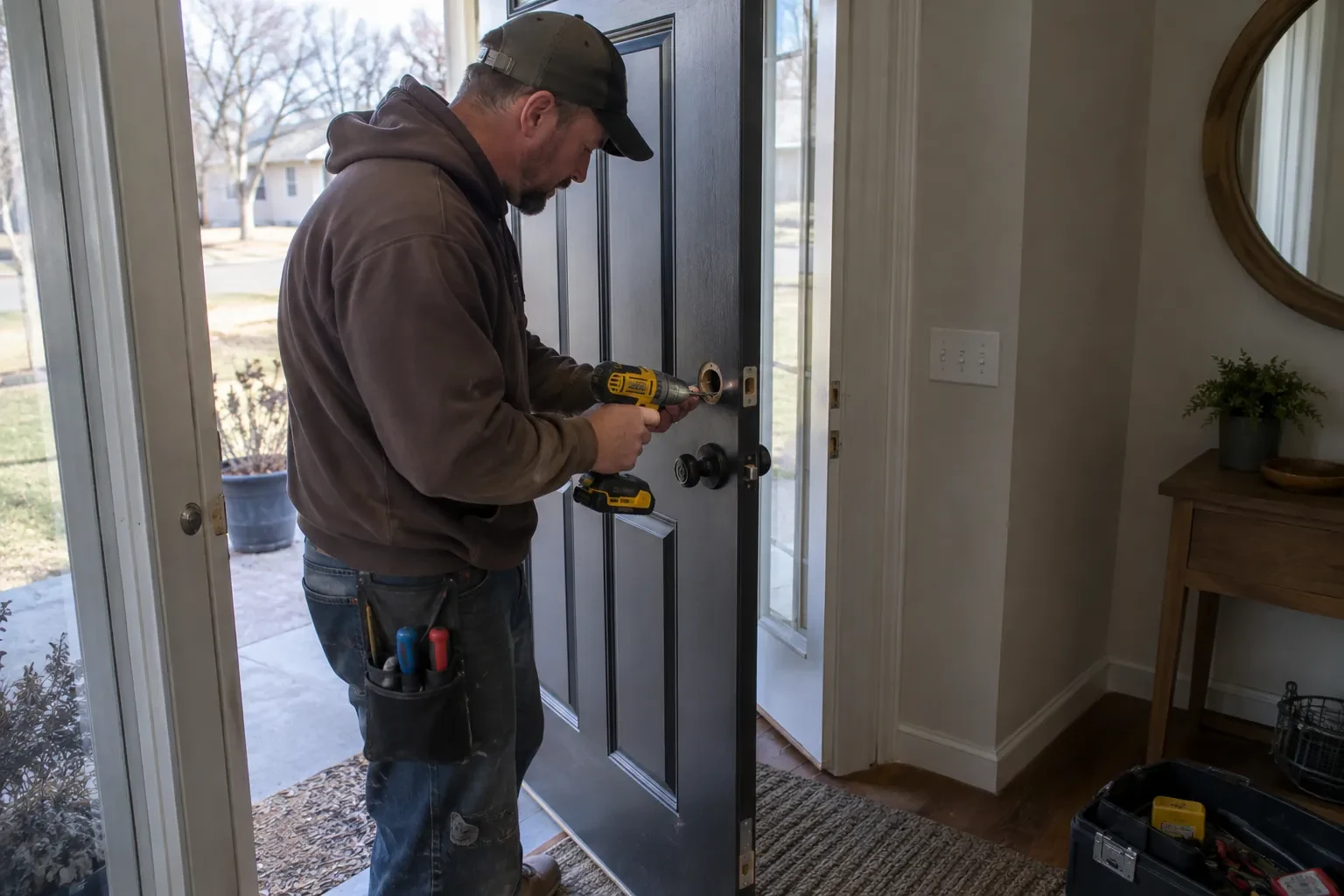
What happens if my identification is not convincing enough on the spot?
The work pauses rather than proceeds, and the locksmith helps you find another route: a neighbour or building manager who can confirm you live there, a document on your phone, a family member who can bring paperwork, or completing the check inside after entry when the documents are behind the door. Verification protects you as much as anyone, because the same standard applies to whoever might one day claim to live at your address. Home Lockout Service
Our storefront lock freezes every winter. What do you do about it?
On the day, the cylinder is thawed with lock de-icer or gentle warmth, never hot water or a flame near aluminium, and dried before a moisture-shedding dry lubricant goes in. To stop the pattern, the keyway gets a cover on the most exposed door, salt is kept off the bottom rail, and the closer is adjusted for cold fluid so the door still latches. A cylinder that freezes yearly may be better placed or shielded. Business Lockout Service
Do you need my spare key?
It helps if there is one. A crisp spare is the ideal pattern for the replacement, better than the broken halves and far better than a worn copy. It also lets the locksmith test the cylinder the moment the fragment is out, which shows whether the pins and springs are sound. If the spare is itself bent or worn, mention that too; it is a candidate for retirement rather than a pattern. Broken Key Extraction
Should I upgrade to a stronger deadbolt while you are here?
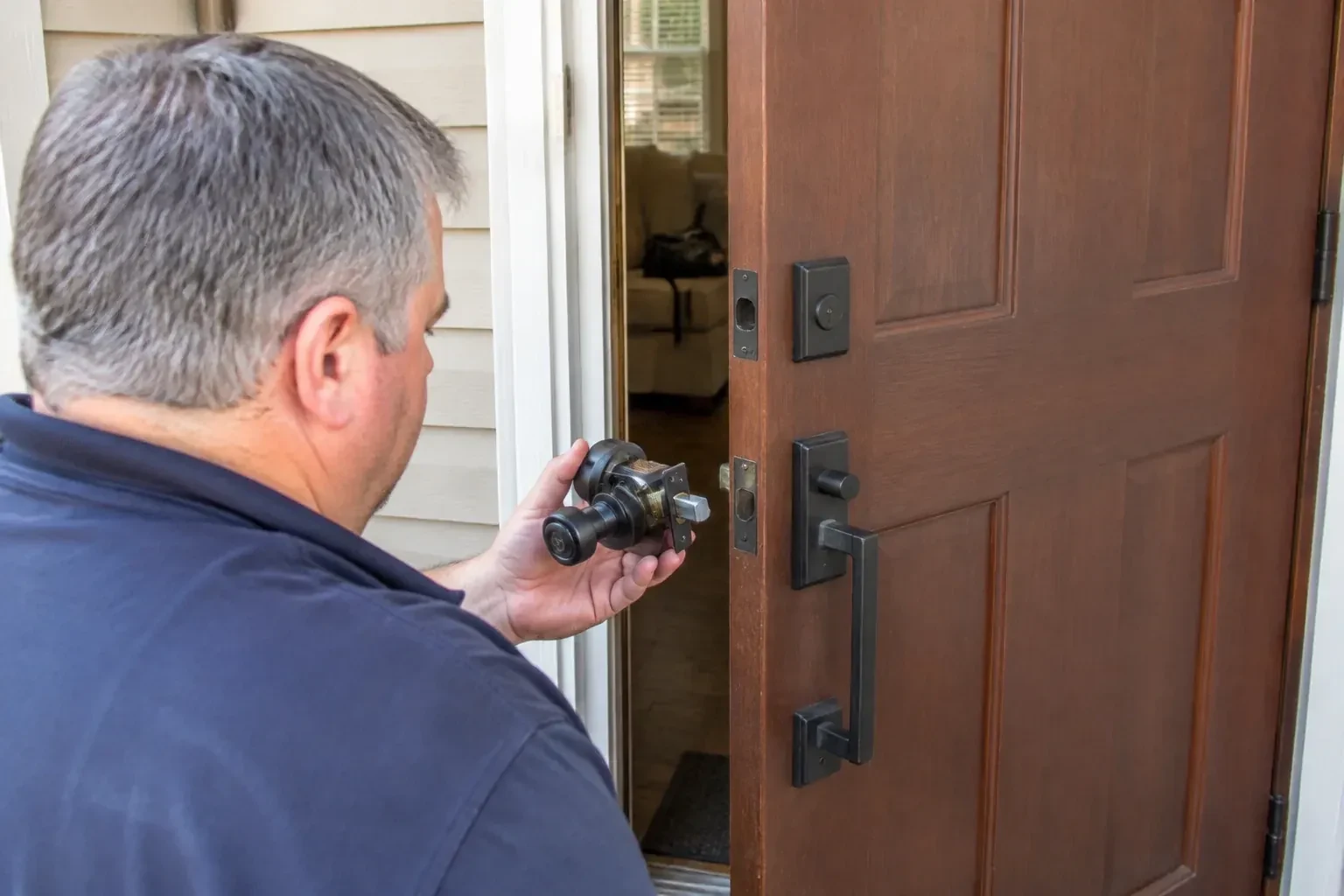
It is the natural moment, because the door is already open for repair. A deadbolt with a full one-inch throw, a hardened insert against sawing and a low-profile face that resists a wrench grip, graded to a recognised durability standard, takes little extra effort to fit now compared with a return visit. Pair it with the reinforced strike and long screws and the door becomes hard to attack from any side. The choice is yours; the locksmith shows the options and lets you decide. Break-In Damage Lock Repair
Change or Rekey Locks
My house is older and has a mortise lock. Can that be rekeyed?
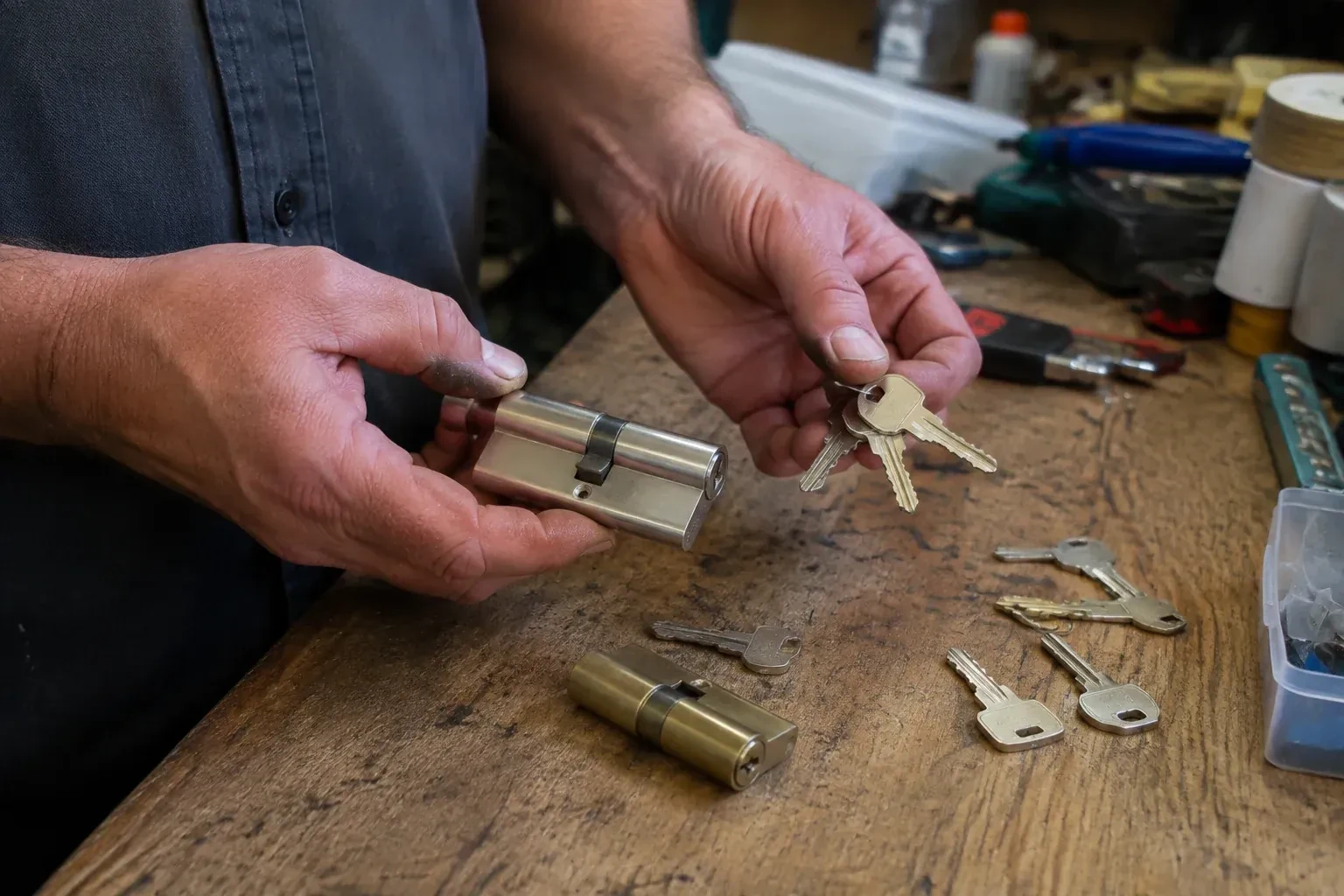
Yes. A mortise lock, the kind with a large case set into the edge of the door, uses a threaded cylinder held by a set screw reached from the door's edge. The cylinder unthreads, is pinned like any other and screws back in. Where a very old lock uses a bit key or a lever mechanism instead of a pin cylinder, the locksmith will explain the options, which may include fitting a modern cylinder into the existing case so the door keeps its original hardware. Lock Rekeying
Can a deadbolt be added to a door that only has a knob?
Yes, on nearly any wood, steel-clad or fibreglass entry door. The locksmith marks a spot above the knob, clamps a jig to the door and bores a cross hole through the face and a smaller hole through the edge, then cuts a pocket and fits a strike on the frame. The main things checked first are the door's thickness, what is inside it at that height and whether glass sits close by. Deadbolt Installation
Is it possible to upgrade just the exterior locks now and handle interior doors later?
Yes, and it is a common way to spread the work out. Exterior doors carry the security load, so starting there with a graded deadbolt and a reinforced strike covers the part that matters most first. Interior locks, passage sets, privacy locks on bathrooms and bedrooms, can be scheduled for a later visit without affecting anything already done, and the locksmith can note what was fitted so the second visit matches it. Lock Replacement & Upgrade
What if the case is too worn to repair?
Then a replacement case goes into the existing pocket. Reproduction mortise cases are made in the common vintage sizes and backsets, and a modern mortise case with a cylinder fits many old pockets with minor trimming. The locksmith measures the case height, depth, backset and trim spacing before ordering, aiming for the new case to drop in with the original knobs and plates going back on, though a small pocket trim or fixing change is sometimes needed. Cutting the door for a different kind of lock is the last choice. Vintage Mortise Lock Service
High Security Locks
Can a mechanical dial safe be opened without drilling it?
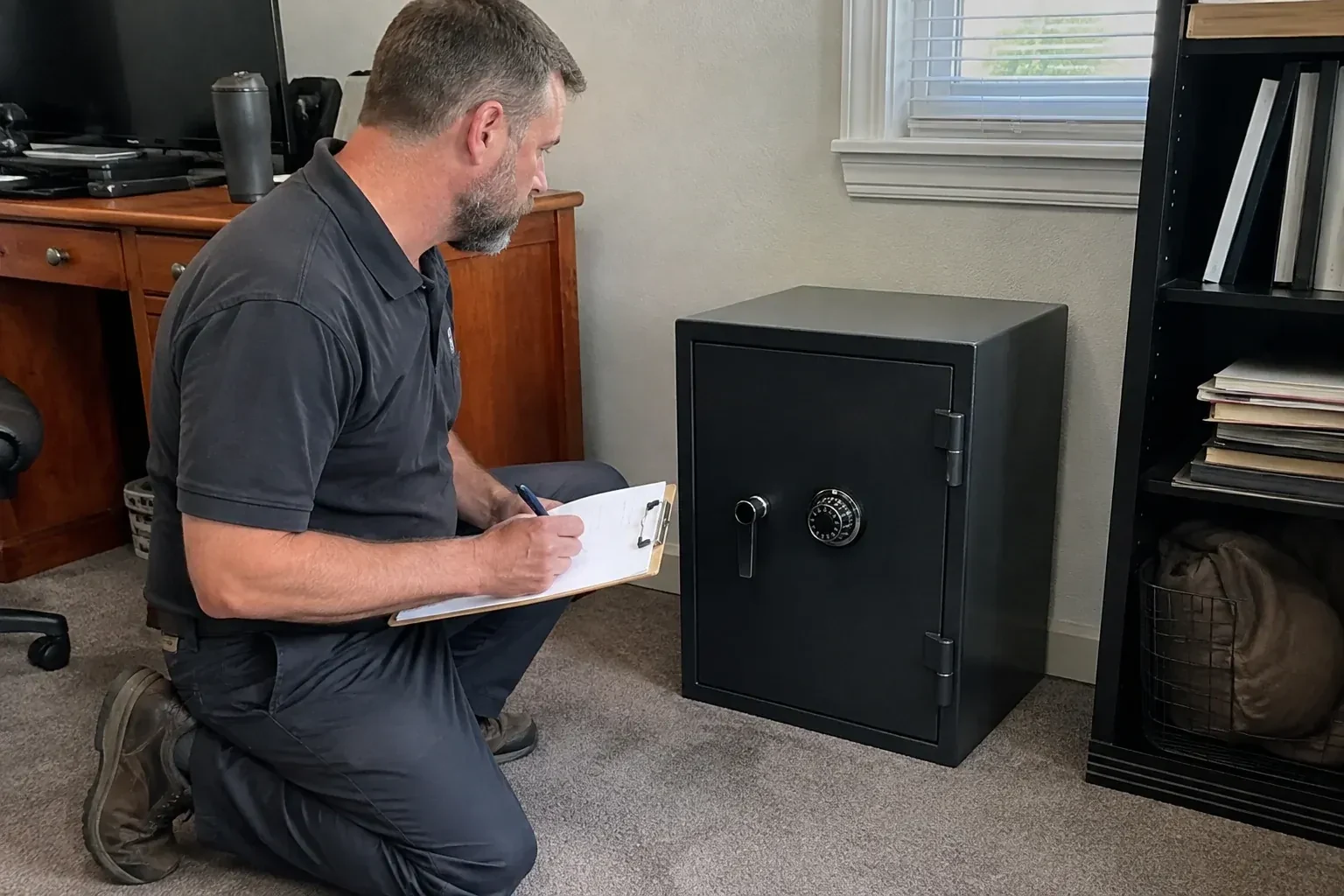
Most of the time, yes. Manipulation reads the wheel pack through the dial by feel, and decoding tools built for a specific lock family read the gate positions directly, both without any lasting effect on the lock. Whether either works depends on the lock's own security rating and condition, since a high-security Group 1 lock resists these methods far longer than an older Group 2 one, but drilling is only used once both routes are ruled out. Safe Opening & Combination Change
What kind of floor can a safe be anchored to?
Solid concrete is the most straightforward surface, taking a masonry anchor bolt directly. A wood subfloor works too, provided the anchoring reaches into the floor joists beneath the surface layer rather than just the plywood or the flooring on top. Tile is the awkward case, since a bolt through it tends to crack the surrounding tiles, and an alternative anchoring point or a different spot in the room is usually the better route there. Safe Installation & Servicing
What is bumping, and does this stop it?
Bumping uses a specially cut key that is struck while under light turning pressure, bouncing the pins to the shear line for an instant so an ordinary cylinder opens. It works on many standard pin tumblers. A high security cylinder needs its sidebar released by separately positioned finger or rotating pins at the same moment, and a bump key cannot set those, so the plug stays locked. It is one of the clearest advantages of the upgrade. High Security Locks
Commercial Locks
Does stamping keys 'do not duplicate' stop people copying them?
Not reliably. The stamp is a request, and any key on a standard blank can be copied by anyone with the blank and a machine. What does work is controlling the blank itself through a restricted keyway, or controlling access to the lock through interchangeable cores and a tight register. Stamping still has a place: a serial code on each key, instead of the business name, lets you track it without telling a finder where it fits. Commercial Rekeying
How does a master key system work in a shared or multi-tenant building?
A tenant's own hierarchy for their suite is designed and held separately from the building's shared systems, such as a condominium corporation's lobby or garage keying or a landlord's building-wide master. The two sit alongside each other rather than merging, so a tenant's private levels stay private while common areas continue to answer to whoever already manages them. Master Key System Design
How do you decide where the readers and door hardware physically go?
A short walk-through maps which doors get used most, where wiring can run cleanly, and where a reader sits at a comfortable reach for everyone, including anyone using a wheelchair or a cart. Door swing and nearby glass affect where a strike or a magnetic lock sits, and mounting height gets checked against the existing door hardware so nothing interferes with the handle or closer. That walk-through happens before ordering hardware so the layout matches the building rather than the other way around. Access Control Installation
What counts as panic hardware?
Panic hardware is a door-latching device, usually a crossbar or touchpad running most of the door's width, that releases the latch the moment someone pushes on it from the inside. It is built and tested so a light, even push anywhere along the bar opens the door, which is why it is chosen for doors serving rooms with enough people that fumbling for a key during an exit is not acceptable. Panic & Exit Hardware
Car Keys
I am on the shoulder of the highway. Is it safe for you to work there?
It can be, with the routine stranded drivers are given: hazard lights on, out of the driving lanes, and nobody standing on the traffic side. The locksmith parks behind the car as a shield, works from the side away from traffic, and asks you to wait somewhere safe. If the shoulder is too narrow or the traffic too heavy, moving the car a short way to the next exit or lot by tow may be the better order of things. Car Lockout Service
My fob is cracked but still works. Do I need a whole new key?
Usually not. A cracked case often protects a healthy circuit board and transponder, and those can be moved into a new shell of the same pattern with a freshly cut blade. Because the electronics are unchanged, nothing needs programming, and the rebuilt key behaves exactly as before. A new key is the answer when the board is corroded, a button has died or the chip has been damaged. Car Key Replacement
Should I get the locks rekeyed when I get a spare, or is that a different service?
They are related but not identical, since a car's door and ignition locks are a separate mechanical layer from the immobilizer even though both systems usually get touched in the same visit. Making a spare and removing a genuinely unaccounted-for key's electronic access are handled together, and if that lost key's blade could still turn a matching door cylinder by hand, the locksmith rekeys that cylinder as part of the same appointment. Spare Car Key Duplication
What is the difference between a remote, a transponder key and a proximity fob?
A basic remote only operates the locks and alarm from a distance while a separate metal key still starts the engine. A transponder key combines a cut blade with a chip the immobilizer reads before allowing a start. A proximity fob goes further: it authorizes entry while it is nearby, though most vehicles still need the handle touched, gripped or pressed to actually unlock, and it starts the engine with a push button, with no key insertion needed day to day. Each type is programmed differently. Key Fob Programming
On-site assessment preferred
Request a visit
Ask about a spare key before you need one. Talk to us about access for your staff.