Change or rekey · Douro-Dummer
Deadbolt Installation in Douro-Dummer
The bolt on the front door is keyed on both sides. Getting out at night means finding the key in the dark, and with a toddler in the house you have decided the inside should turn by hand.
Deadbolt Installation
In plain words
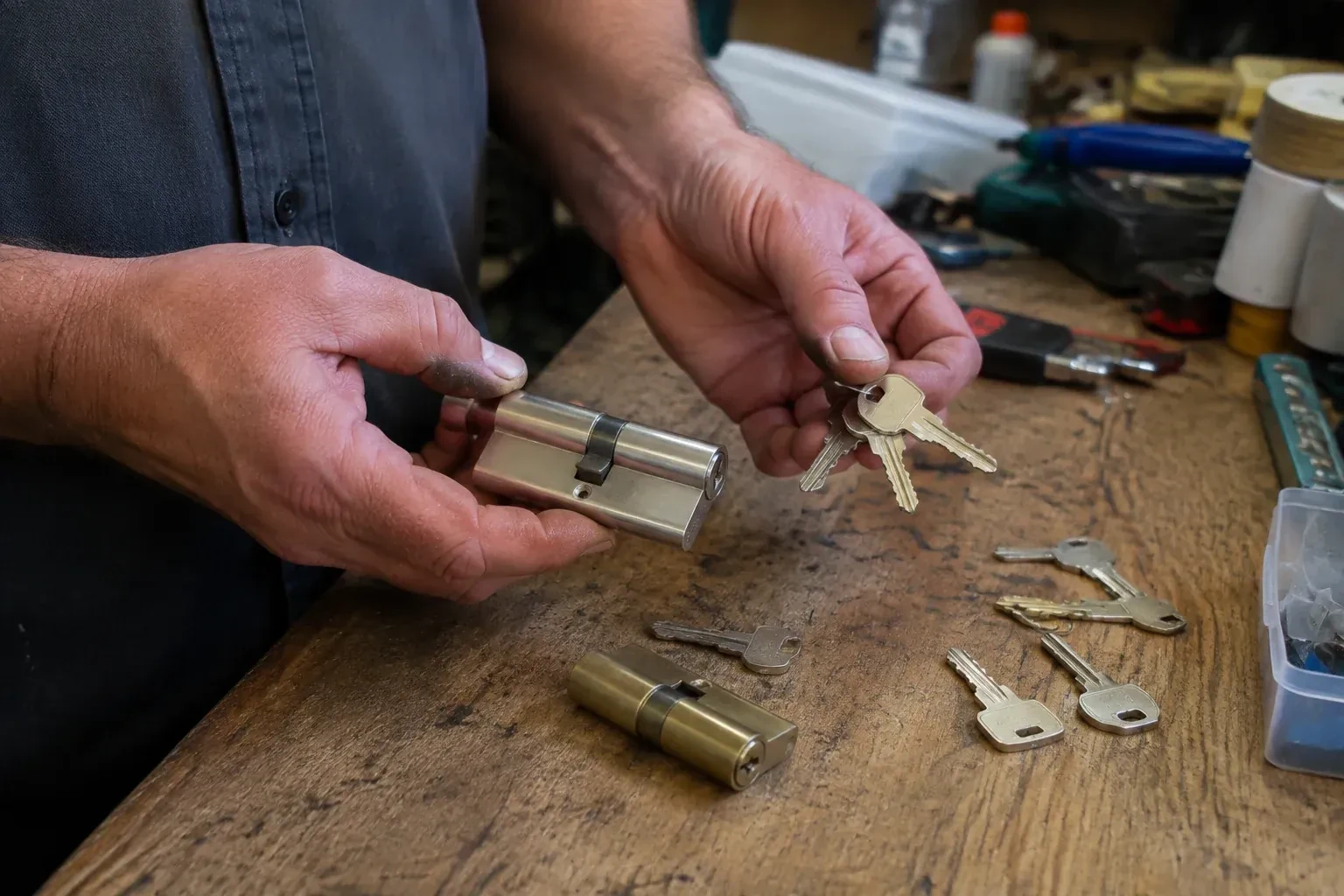
A deadbolt installation is also the moment to sort out keys. The new cylinder can be pinned to match the key you already use, so the household stays on one key, or set to a fresh key if you would rather retire whatever copies are in circulation. Many keypad and smart deadbolts fit the same standard bore as a mechanical one, so a door prepared today for a keyed bolt often accepts one later, though the exact model's bore and thickness still need checking. Either way you leave with keys that work in every door they are meant to, tested one by one.
How the visit goesThe front door has a handsome lever and a keyed knob, and that is all. Nothing above it. When the door is shut, the only thing keeping it closed is a spring latch the width of a thumbnail, and you have started to notice.
Douro-Dummer
How the visit goes
What the door is made of
The first thing the locksmith reads is the door itself, because it decides how the holes get cut. A solid wood slab in a century home bores cleanly but can split at the edge if the mortise is rushed. A steel-clad insulated door has a thin metal skin over foam, sometimes with a wood block at lock height, and needs a metal-cutting hole saw run slowly. Fibreglass behaves like a hard plastic and chips if the bit grabs. Thickness matters too: most exterior doors are 44 mm, some older ones 35 mm, and the deadbolt's screws and collar have to suit that. Ten seconds with a tape and a knuckle on the face answer all of this.
Fitting the bolt and setting the backset
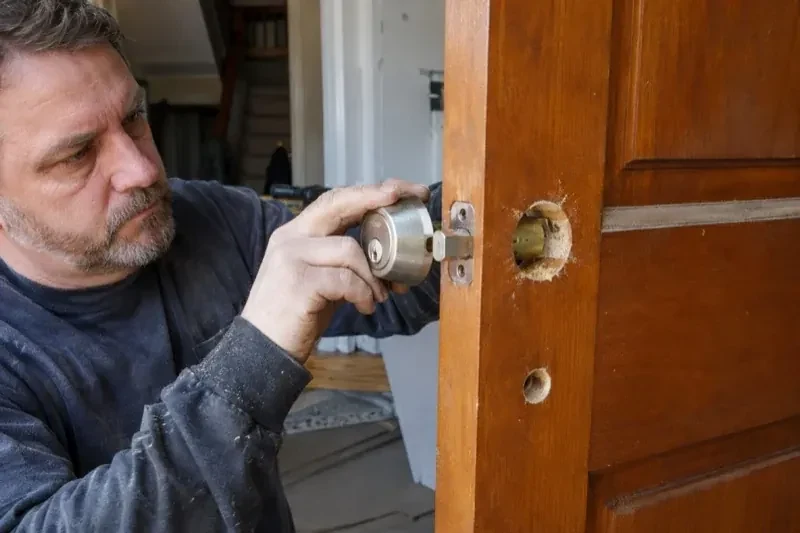
The bolt assembly slides into the edge bore with the faceplate set the way its maker marks, commonly the word "top" facing up. Most residential bolts adjust between 60 mm and 70 mm by twisting or sliding the faceplate, and the locksmith sets it to the backset measured earlier so the tailpiece from the cylinder lands in the centre of the bolt's cam. The bolt is secured with its two short screws, and the locksmith works it in and out by hand to feel that it runs freely through the door without rubbing on the bore. On an insulated door a round drive-in collar may replace the flat plate where the edge is too thin to mortise.
Ready for a smart lock later
Because the door was prepared to the standard bore and backset, it suits many future options, though the model chosen later still sets its own bore, backset and thickness requirements. Keypad and app-controlled deadbolts fit the same 54 mm cross bore and the same edge bore as the mechanical lock fitted today, so upgrading later means swapping the hardware, not cutting the door again. The backset and bore measurements are written on the packaging left with you. If you want to think about a keypad down the road, ask the locksmith which models suit the door thickness and whether a backup keyed cylinder is worth having for the one day the batteries are flat.
Deadbolt Installation
In the van
- Sharp chisel and mallet
- Bolt faceplate or drive-in collar
- Dry PTFE lubricant
- Manufacturer's bore template
- Single-cylinder deadbolt
What affects the quote
Same fees day, night or weekend
1Number of doors
One front door is the simplest case. Front, back, side and garage-to-house doors done in one visit share the travel and setup, so the per-door figure usually eases as the count rises.
2Storm door or restricted clearance
A tight storm door, a narrow lock stile or a decorative panel at bolt height can require low-profile trim or a shifted position, which is settled and quoted at the assessment.
3Door and hinge corrections
A sagging door, loose hinge screws or thick weatherstrip are put right before a bolt is fitted, and that adjustment is quoted as its own line rather than folded into the lock.
Deadbolt Installation: questions
Can a deadbolt be added to a door that only has a knob?
Yes, on nearly any wood, steel-clad or fibreglass entry door. The locksmith marks a spot above the knob, clamps a jig to the door and bores a cross hole through the face and a smaller hole through the edge, then cuts a pocket and fits a strike on the frame. The main things checked first are the door's thickness, what is inside it at that height and whether glass sits close by.
What do lock grades mean when I am picking a deadbolt?
Residential deadbolts are graded under an industry standard in three categories, security, durability and finish, with letter grades from C through A, so a lock marked with three A grades has met the highest level in each. Heavier commercial-pattern bolts are graded 1, 2 or 3, with 1 the highest. The grades let you match hardware to a busy family door or an exposed side entrance without relying on the weight of the box.
Can a keypad or smart deadbolt be fitted instead of a keyed one?
Yes, and the preparation is the same. Many electronic deadbolts use the standard 54 mm bore and the same edge bore, so a door cut for a mechanical bolt often accepts one, and a keyed bolt fitted today can usually be swapped for a keypad later, subject to that model's own bore, backset and thickness needs. The locksmith checks door thickness against the model, fits a reinforced strike as usual, sets up codes with you and shows where the backup cylinder or battery terminals are.
Change or Rekey Locks
- Lock Replacement & UpgradeSomeone tried the back door while you were away.
- Vintage Mortise Lock ServiceThe old skeleton key still fits the keyhole, but it now needs a jiggle, a lean on the door and a…
- Smart Lock InstallationThe rental turns over every few months and each time you drive across town to swap keys, then…
Deadbolt Installation near you
Below is the full menu of lock and key work available in Douro-Dummer, written for people who are not locksmiths. Each entry says what the service is, when it makes sense, and roughly how a visit unfolds, so you can arrive at the door already knowing what the technician is going to do and why.