Change or rekey · Young's Point
Lock Rekeying in Young's Point
Your roommate moved out last weekend. Rent is settled, the room is empty, and the key is still on their ring.
Lock Rekeying
In plain words
For landlords and tenants, rekeying is the tidy way to handle a change of occupancy. A departing tenant may have copied a key or simply forgotten to return one, and a fresh pinning means the incoming tenant is the only person holding a working key. Tenancy rules in this province expect a landlord who changes locks to give the tenant a replacement key and a tenant to have the landlord's consent before changing them, so a locksmith asks who is requesting the work and makes sure both sides end up with a key. A small record of the doors and key count keeps everyone clear.
How the visit goesThe builder handed over your new home with a stack of identical keys, and you know the framing crew, the painters and the flooring installers all used a construction key during the build. The doors are brand new, but the key that opens them should be yours alone.
Young's Point
How the visit goes
Counting the keys that are already out there
Part of planning a rekey is understanding why it is happening. The locksmith asks how many keys exist as far as you know, who has held one, and whether any went missing with something identifying the address. The answers do not change the pinning, but they shape the advice: whether a padlock or mailbox shares the same risk, whether a garage keypad code should change on the same visit, and how many new keys make sense to cut. It also helps to know whether any key is a restricted or patented type, since those are cut from a record rather than duplicated and may involve the original supplier.
Cutting the new key and gauging the depths
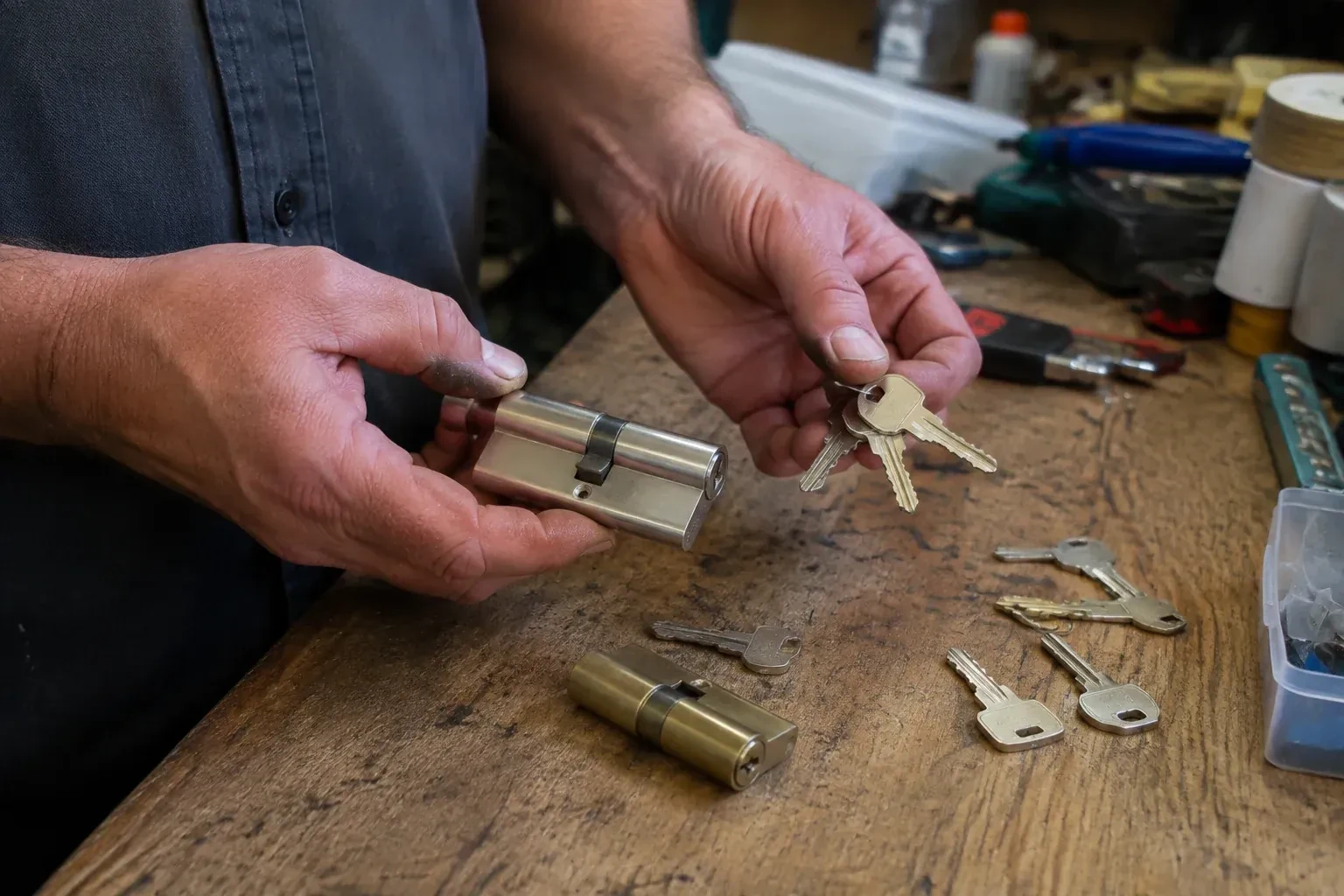
On this cylinder type, the new key comes first, then the pins to match it. The locksmith cuts a fresh key from a blank on a code cutter or duplicator, choosing a combination that is not close to the old one, and reads each cut with a key gauge to find its depth on the manufacturer's scale. Bottom pins of the matching lengths are picked from a graded pin kit and dropped into the plug chamber by chamber, so that when the new key is inserted every pin top sits exactly at the shear line. A key cut from a clean blank and pins matched to it by gauge is what gives a rekeyed lock that crisp, new feel.
New keys, counted and tried in every door
You finish the visit holding the only keys that work, and you know exactly how many there are. The locksmith cuts the agreed number from the fresh pinning rather than copying one from another, so each is as true as the first, and tries every one in every door it should open before handing them over. Count them, decide who in the household gets one, and put the spare somewhere you will remember. If a door was left on a separate key on purpose, that key is tagged so it does not get mixed into the house set. The whole set fits comfortably on one ring.
Lock Rekeying
In the van
- Graded bottom pin kit
- Key gauge
- Code cutter or key duplicator
- Retaining clip tool
- Pinning tweezers and tray
What affects the quote
Same fees day, night or weekend
1Mailboxes, padlocks and cabinets
Small cam locks on mailboxes and cabinets are usually replaced rather than repinned, and padlocks vary in whether they can join the house key; each of these is priced as its own item.
2Several units in one building
A landlord rekeying a duplex, a triplex or a small apartment building, with each suite on its own key and a common entry shared, has more cylinders and a keying chart to build, and the quote grows accordingly.
3Travel to the property
Every visit includes the drive. A home across town and a rural property at the end of a long road involve different travel time, and the quote reflects the trip as well as the bench work.
Lock Rekeying: questions
My house is older and has a mortise lock. Can that be rekeyed?
Yes. A mortise lock, the kind with a large case set into the edge of the door, uses a threaded cylinder held by a set screw reached from the door's edge. The cylinder unthreads, is pinned like any other and screws back in. Where a very old lock uses a bit key or a lever mechanism instead of a pin cylinder, the locksmith will explain the options, which may include fitting a modern cylinder into the existing case so the door keeps its original hardware.
One of my locks is stiff and worn. Can it still be rekeyed?
Often the stiffness is grit, old oil and tired springs rather than real wear, and those are handled while the cylinder is on the bench: the plug is cleaned, new springs go in with the new pins, and a dry lubricant finishes it. If the plug has worn oval or the housing is damaged, the locksmith shows you and suggests a replacement cylinder pinned to the same key, rather than fresh pins in a lock that will keep dragging.
Can I keep one door on a different key from the rest?
Yes, and it is common. A basement suite or in-law apartment often gets its own key so the tenant's key opens their door and nothing else, while your key opens the main house. A home office, a storage room or a shed can be kept separate for the same reason. The locksmith sets up the groups you want, pins each accordingly and tags the keys so the separate one is not mixed into the household set.
Change or Rekey Locks
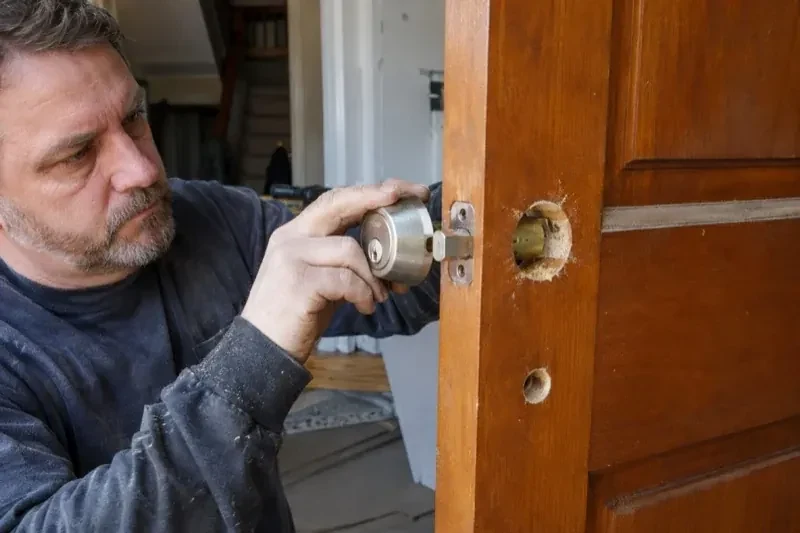
- Lock Replacement & UpgradeSomeone tried the back door while you were away.
- Vintage Mortise Lock ServiceThe old skeleton key still fits the keyhole, but it now needs a jiggle, a lean on the door and a…
- Smart Lock InstallationThe rental turns over every few months and each time you drive across town to swap keys, then…
Lock Rekeying near you
The lock services offered in Young's Point are grouped the way a door is used. Getting back in when you are locked out. Deciding who holds a working key. Upgrading the hardware so the door resists more than a casual try. Keeping commercial entrances working. Opening and maintaining safes. Each is described below.