Lockouts · North Kawartha
Business Lockout Service in North Kawartha
After last night's power flicker the card reader beside the clinic door shows nothing. Fobs do nothing, the electric strike stays locked, and the small brass override key that came with the system is in a desk drawer on the far side of the door.
Business Lockout Service
In plain words
A business lockout service reopens commercial premises when the door is locked and nobody on site can open it. The locksmith begins by confirming that the person asking for entry has authority to act for the business, through identification and a document or a phone call that ties them to the premises. The hardware and any connected alarm or access system are identified next, and the door is opened by the gentlest method the lock allows. Once staff are inside, whatever caused the lockout is put right so the doors lock again at closing, and a written account of the work is left for the business's records.
How the visit goesAfter last night's power flicker the card reader beside the clinic door shows nothing. Fobs do nothing, the electric strike stays locked, and the small brass override key that came with the system is in a desk drawer on the far side of the door.
North Kawartha
How the visit goes
Alarm, reader and anything wired to the door
Before the door moves, the locksmith asks what will notice when it does. Is there an alarm with a contact on this door, who holds the code, and should the monitoring company be told to expect an entry? Is the door controlled by a card reader, keypad or intercom, and does it use an electric strike, fail-secure or fail-safe, or a magnetic lock, which releases? Is there a mechanical override cylinder and does anyone hold its key? Has the access-control provider got remote access to unlock it? These answers decide whether the opening is a phone call, a battery, an override key or conventional lock work, and they keep the security system intact afterwards.
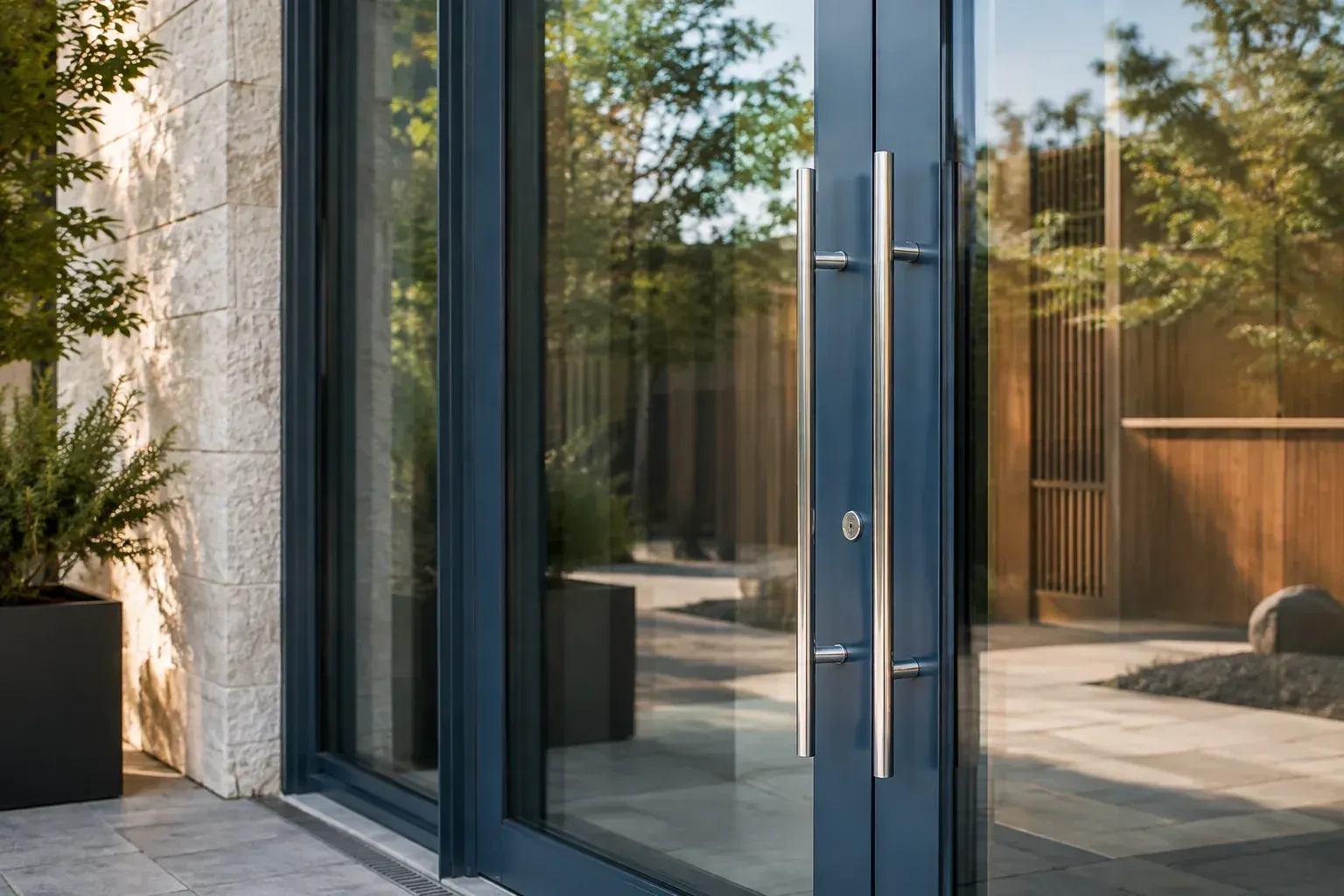
Opening an aluminium storefront door
The narrow stile of a glass storefront door carries a mortise cylinder that turns a cam inside a slim lock case. The locksmith picks or decodes that cylinder, then works the cam through its full travel to draw the hookbolt out of the frame or lift the deadlatch. A hookbolt hangs into its strike and cannot be pushed back with a shim, so the cylinder is the honest route in. Once open, the cylinder's set screw and cam alignment are checked, because a cam that has slipped a few degrees is a common reason the key stopped working, and the paddle inside is tested so staff can leave through the same door without a key.
Exit doors that still let everyone out
Whatever was replaced, a door on the way out of the building still opens from inside with a single motion and no key while people are in it. That standard is why a storefront gets a thumb-turn or paddle inside, a rear door keeps its push bar, and a double-cylinder deadbolt does not go on an exit route. The locksmith checks each door for this before leaving and points out any older hardware, such as a chain or a keyed-inside bolt on a back door, that the business may want to bring into line.
Business Lockout Service
In the van
- Commercial pick and tension tools
- Strikes, pivot shims and closer adjustment tools
- Key blanks and code cutter
- Broken key extractors
- Control keys and core-removal tools
What affects the quote
Same fees day, night or weekend
1Master key system changes
Where the door belongs to a building-wide master key system, changing it means planning with the property manager and pinning cylinders so both your key and the building key still work, which is more careful work than a single rekey.
2How many doors are involved
One front door is the simplest visit. A front door, a rear exit device, a roll-up padlock and a cash office add hardware to open and, often, cylinders to key alike afterwards.
3Distance and access to the door
Travel is part of every call-out, and so is reaching the door: a plaza unit at street level, a suite behind a locked lobby, or a loading dock at the back of an industrial park each take a different amount of the locksmith's time.
Business Lockout Service: questions
Our storefront lock freezes every winter. What do you do about it?
On the day, the cylinder is thawed with lock de-icer or gentle warmth, never hot water or a flame near aluminium, and dried before a moisture-shedding dry lubricant goes in. To stop the pattern, the keyway gets a cover on the most exposed door, salt is kept off the bottom rail, and the closer is adjusted for cold fluid so the door still latches. A cylinder that freezes yearly may be better placed or shielded.
Can we put a keyed deadbolt on both sides of the back door for extra security?
On a door people leave through while the building is occupied, the door needs to open from inside with one motion and no key, so a key-both-sides bolt is not the right tool there. Security is added instead with a heavy-duty exit device and a reinforced strike, a keyed trim outside, an alarm contact, or a door position sensor on the access system, all of which keep the way out clear.
An employee left and never returned their keys. Should we rekey?
It is the sensible step, and a lockout visit is a convenient moment for it. Rekeying keeps your existing cylinders and changes the pins so a new key operates them and the unreturned one does nothing. If your doors use interchangeable cores, swapping the core takes minutes. Bring every door that shared the old key onto the new one, count the fresh keys into named hands and start a register so the next departure is a line in a book rather than a call.
Lockout Services
- Broken Key ExtractionIn the parking lot your car key snapped in the driver's door.
- Break-In Damage Lock RepairPolice have come and gone, the occurrence number is on a sticky note, and you are standing in a…
- Seized & Jammed Lock OpeningThe key slides all the way in, exactly as it has for years, and then refuses to turn in either…
Business Lockout Service near you
For people in North Kawartha who like to know before they call: these pages describe each lock service in detail, from the routine rekey to the less common safe opening or master key design. They explain the steps, the parts involved and the decisions you may be asked to make on the day.